Hybrid Work Model Explained: Best Practices for Managing Hybrid Teams
The traditional 9-to-5 office structure has officially evolved. In its place, a more flexible, dynamic approach to the professional world has emerged as the global standard. Today, organizations are no longer debating whether to offer flexibility; instead, they are focusing on how to optimize it.
Transitioning to a hybrid work model requires more than just telling employees they can work from home a few days a week. It demands a deliberate shift in communication, technology, and leadership to keep distributed teams cohesive and high-performing.
What Is a Hybrid Work Model?
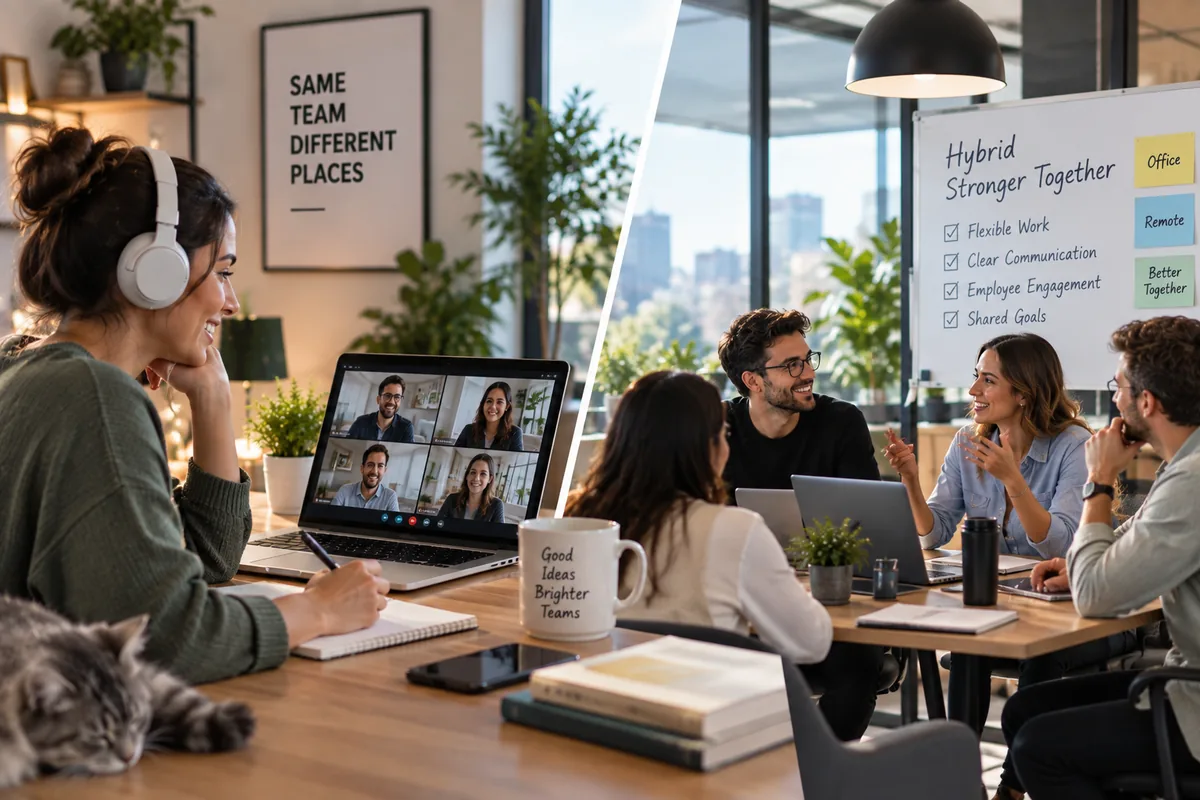
A hybrid work model is a flexible workplace structure that blends in-office and remote working practices. Instead of requiring all employees to be physically present at a corporate office every day, this framework allows individuals to divide their time between their homes, co-working spaces, and the company headquarters.
There is no one-size-fits-all approach to hybrid work. Some organizations implement structured schedules (such as requiring office attendance on specific days), while others adopt a fully autonomous approach, empowering employees to choose where they work based on their daily tasks and personal needs.
What Are the Benefits of Hybrid Work?
When executed correctly, a hybrid workplace offers a powerful win-win scenario for both employers and employees:
Enhanced Work-Life Balance: Eliminating daily commutes gives employees hours back each week, reducing stress and allowing more time for family, wellness, and personal development.
Access to Top Talent: Geographical constraints disappear. Companies can recruit highly skilled professionals from different regions without requiring relocation.
Significant Cost Savings: Businesses can downsize their physical real estate footprints, lowering overhead expenses like rent, utilities, and office supplies.
Boosted Employee Morale: Offering autonomy over where and how work gets done fosters a culture of mutual trust, which directly increases job satisfaction.
How Do You Manage Hybrid Teams?
Leading a team that is split between the office couch and the corporate conference room requires a shift away from traditional oversight toward modern, empathetic leadership. Successful managers focus on key foundational principles:
Shifting to Outcome-Based Tracking
Micro-management fails in a hybrid setup. Instead of monitoring desk time or tracking green "active" status dots on chat apps, evaluate managers and teams based on their outputs, project milestones, and the quality of their work.
Prioritizing Inclusion and Proximity Bias Awareness
Proximity bias is the natural tendency to favor employees who are physically closer or more visible in the office. When managing hybrid teams, ensure that remote workers receive equal visibility, career development opportunities, promotions, and recognition.
Establishing Clear Communication Agreements
To prevent digital fatigue, establish clear boundaries regarding communication channels. Define what requires an instant message, what warrants an email, and when an actual video meeting is necessary.
How Do You Keep Hybrid Teams Productive?
Maintaining peak performance across a distributed workforce relies heavily on eliminating digital friction and keeping everyone aligned around corporate objectives:
The Hybrid Rule: Productivity thrives when employees spend less time navigating clunky tools and more time focused on actual execution.
Centralize the Tech Stack: Fragmented tools create information silos. Implement a unified digital workplace platform where task management, project tracking, and documentation live under one roof.
Optimize Asynchronous Work: Create a documentation-first culture. When project briefs, updates, and processes are recorded clearly, team members can keep moving forward without waiting for someone in a different location to wake up or log on.
Keep Social Bonds Intact: Distance can breed isolation. Schedule regular virtual coffee breaks, casual team-building activities, or quarterly in-person gatherings to preserve company culture.
Empower Your Hybrid Workforce with Weoll
Successfully navigating a hybrid workplace comes down to having the right technology to support your culture. When employees are forced to jump between dozens of disconnected apps to request leave, check company announcements, or collaborate on projects, productivity drops and frustration grows.
Weoll solves this by uniting your entire organization inside a single, intuitive digital experience platform. Weoll brings internal communications, automated HR workflows, seamless employee onboarding, and interactive feedback loops into one central hub. By replacing digital clutter with a streamlined workspace, Weoll keeps your remote and in-office teams perfectly aligned, highly engaged, and consistently productive.
Ready to unlock the true potential of your flexible workplace? Visit weoll.com today and discover how to optimize your hybrid team management.
Yeni Yayınlardan İlk Siz Haberdar Olun!
En güncel içerikler için e-posta listemize katılın.