
iBPM vs Traditional BPM What's the Difference and Why It Matters in 2026
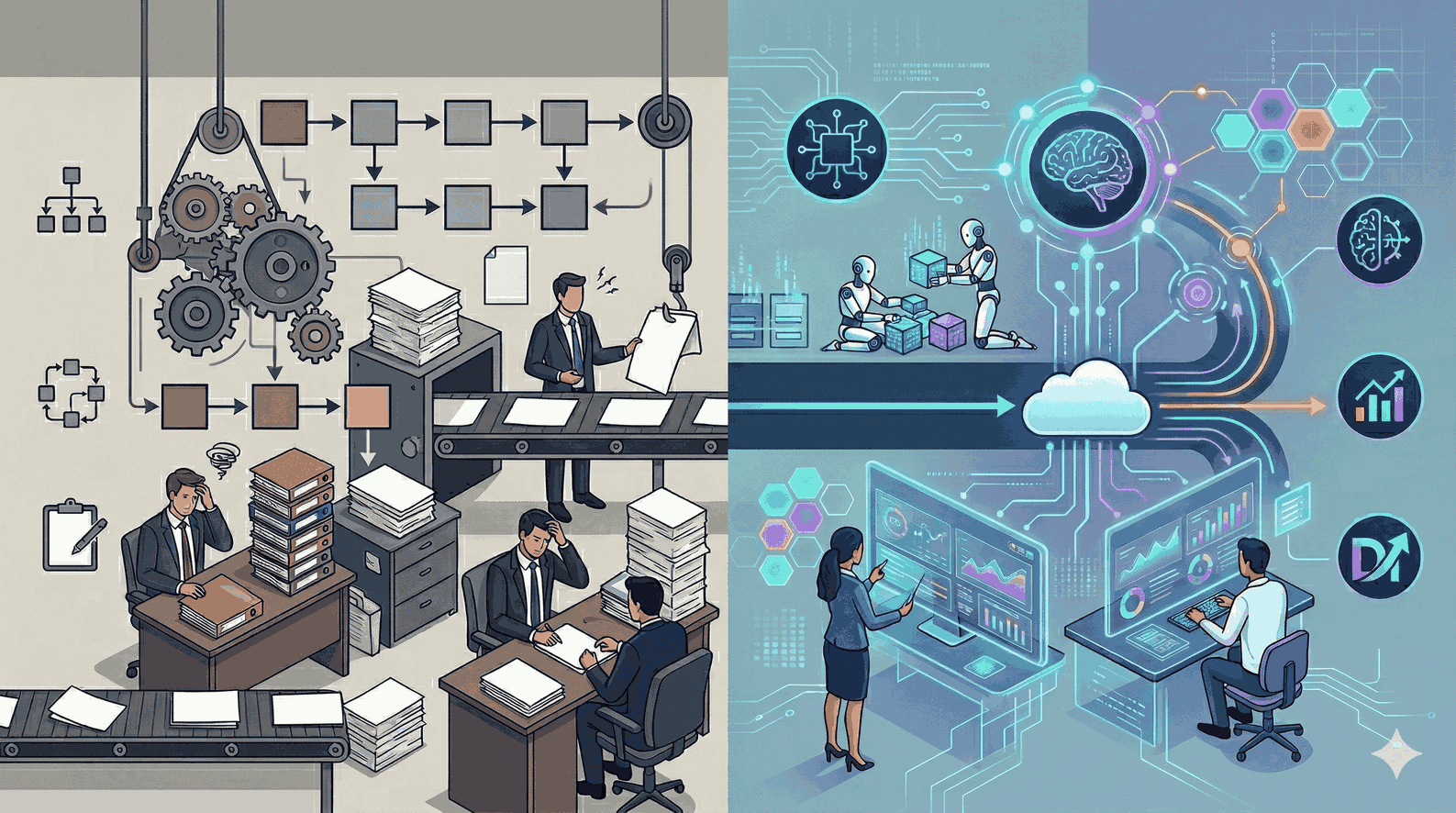
As businesses navigate an increasingly complex and fast-paced digital landscape, the way they manage processes must evolve. The distinction between traditional Business Process Management (BPM) and Intelligent Business Process Management (iBPM) has become a strategic priority for organizations aiming to stay competitive in 2026.
The Limits of Traditional BPM
Traditional BPM focuses on automating and streamlining predefined workflows using rule-based logic. While it delivers improvements in consistency and cost reduction, it struggles to handle exceptions, adapt to changing conditions, or scale without significant manual intervention. Data generated by these systems often remains siloed, limiting its value for deeper operational insights. In short, traditional BPM works well within a fixed set of conditions — but modern business rarely stays fixed.
What Makes iBPM Different?
Intelligent BPM goes far beyond simple automation. By incorporating Artificial Intelligence (AI), Machine Learning (ML), Robotic Process Automation (RPA), and advanced analytics, iBPM creates processes that are dynamic, self-improving, and capable of real-time decision-making.
The key technologies powering iBPM include:
- AI – Enables pattern recognition, predictive modeling, and intelligent decision support across complex workflows.
- Machine Learning – Allows systems to continuously improve by learning from historical data and evolving conditions.
- RPA – Automates repetitive, rule-based tasks, freeing employees to focus on higher-value work.
- Advanced Analytics – Delivers real-time visibility into process performance, enabling data-driven optimization.
Why iBPM Is Essential for Enterprises in 2026
Organizations that embrace iBPM gain a measurable advantage across several dimensions:
Agility – iBPM allows businesses to dynamically adjust processes in response to shifting market demands, without the delays associated with manual reconfiguration.
Customer Experience – Intelligent automation enables personalized interactions at scale, improving satisfaction and loyalty across key customer touchpoints.
Operational Efficiency – Streamlined workflows, reduced errors, and automated decision-making translate directly into lower costs and faster cycle times.
Innovation – With routine tasks handled by automation, human talent can be redirected toward strategic thinking and creative problem-solving.
Data-Driven Decisions – Real-time analytics give leadership the visibility needed to identify bottlenecks, forecast outcomes, and act proactively.
Looking Ahead
The shift toward iBPM is not simply a technology upgrade — it represents a fundamental rethinking of how work gets done. Businesses that continue relying on traditional BPM risk falling behind competitors who are already leveraging intelligent automation to drive growth and resilience.
As 2026 approaches, the question is no longer whether to adopt iBPM, but how quickly organizations can make the transition and position themselves to fully capitalize on its capabilities.
If your organization is ready to move beyond the limitations of traditional BPM, Weoll offers the intelligent process management solutions you need to compete in 2026 and beyond. From AI-driven automation to real-time analytics, Weoll empowers enterprises to transform their operations faster, smarter, and at scale. Don't wait for the competition to pull ahead. Explore Weoll's iBPM solutions today and take the first step toward a more agile, data-driven future.
Yeni Yayınlardan İlk Siz Haberdar Olun!
En güncel içerikler için e-posta listemize katılın.